Home › Masonry Restoration and Historic Preservation
We perform historic masonry restoration in Boston, MA on landmark brick and stone buildings. Our team uses compatible materials and techniques to repair, clean, and stabilize aged façades. We work closely with owners, architects, and preservation boards. Contact us to plan sensitive restoration for your historic masonry structure.
Noble Masonry Boston provides professional historic masonry restoration throughout Boston, MA, Massachusetts and the surrounding area. Our licensed, insured crew delivers safe, clean, on-time work with a free estimate before anything begins. Call (617) 379-7421 or request your free quote.
Historic masonry restoration in Boston, done the right way
Boston has some of the oldest brick and stone buildings in the country, and their masonry behaves very differently from new construction. At Noble Masonry Boston, our masonry restoration and historic preservation work starts with understanding exactly when and how your building was built. A Back Bay brownstone from the 1870s needs different materials and techniques than a 1920s triple decker in Dorchester or a granite church in the South End.
We begin with a thorough visual and tactile assessment. That includes checking brick hardness, mortar condition, patterns of cracking, previous patching, water staining, spalling from winter freeze-thaw cycles, and any bowing or bulging in the wall. On older buildings we often see Portland cement patches that are too hard for the original lime-based mortar, which traps moisture and accelerates brick damage. We document what we see, explain it in plain language, and outline options so you understand the tradeoffs before any work begins.
Our goal is to keep as much original material as possible, and only replace what is truly beyond repair. That approach preserves historic character and usually saves money over time by preventing repeated band-aid repairs.
How we match historic brick, stone, and mortar
Authentic historic masonry restoration depends on getting the details right: brick size and color, pointing profile, sand color, and joint hardness. Noble Masonry Boston uses a step-by-step matching process tailored to Boston area buildings.
For brick or stone, we start by identifying the original material. Beacon Hill rowhouses usually have softer, hand-pressed brick, while many Jamaica Plain and Roxbury properties have harder, later brick. Older foundations might be Roxbury puddingstone or rough-cut granite. We source reclaimed brick when possible, or new brick with similar porosity and size. Using a brick that is too hard next to old soft brick can cause the old units to fail, so we avoid that common mistake.
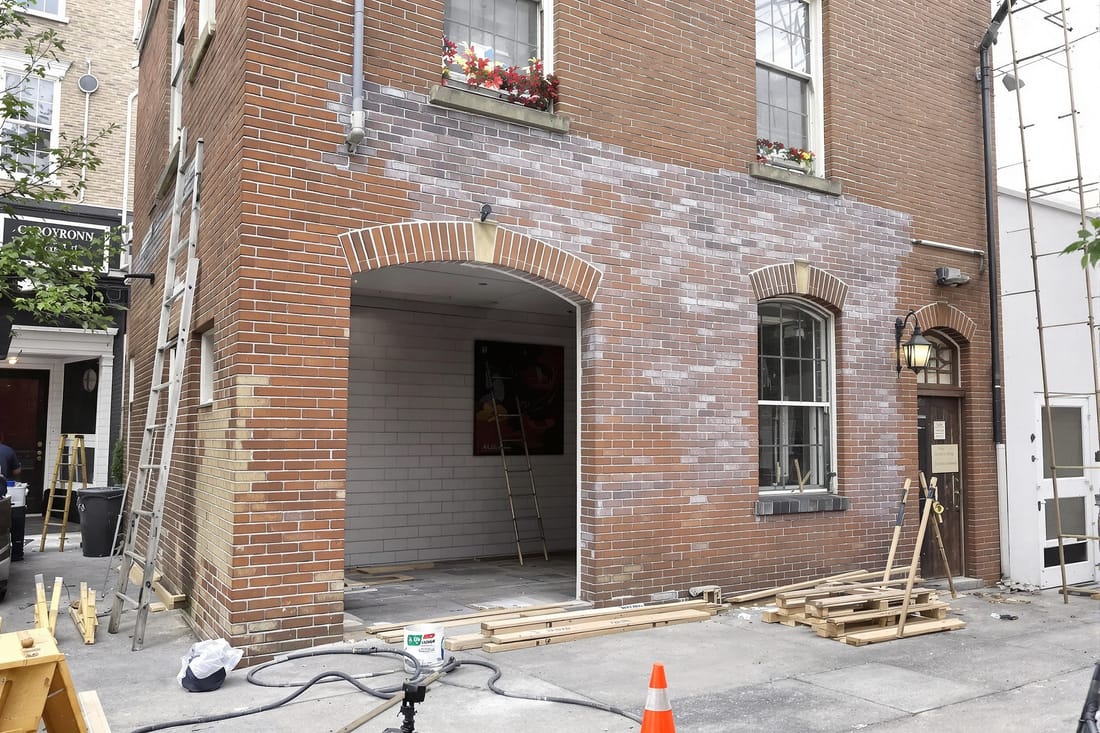
Mortar matching is even more critical. We look at the color of the existing mortar, the size and color of the sand grains, and the way the joint is shaped and finished. On true preservation projects we can send samples to a lab for analysis, but most residential jobs rely on field testing and mockups. We create small sample panels on your building so you can see how the new joints will look when dry and weathered.
In many Boston buildings from the 1800s, original mortar is lime-rich and relatively soft. Using modern high-Portland mortar here can crack bricks and trap moisture. We typically use custom-blended lime mortars or low-Portland mixes that are compatible with the historic fabric while still standing up to New England winters. This compatibility is what keeps your restored masonry stable instead of slowly tearing itself apart.
Typical restoration scope and the steps involved
Every property is different, but historic masonry restoration in Boston often includes a mix of repointing, brick or stone replacement, crack stitching, and water management improvements. Noble Masonry Boston walks you through the sequence so you know what to expect day by day.
A standard project might start with careful setup and protection. We use scaffolding or lifts where required by Boston regulations, then protect windows, trim, and landscaping with poly sheeting and boards. For occupied brownstones and condos, we coordinate access and noise schedules with owners and building management.
Next comes controlled removal of failed mortar and units. We never use high-speed grinders to gouge out joints on historic work. Instead, we use hand tools and small specialty grinders with depth gauges where appropriate, staying within safe joint depths to avoid loosening bricks. Any unstable or severely spalled bricks or stones are removed individually, stored, and either repaired or used as templates for replacements.
Once the wall is prepared, we install new bricks or stones, bedded in compatible mortar, and then repoint the joints in lifts. Joints are compacted properly to avoid hairline voids, then tooled to match the original profile such as concave, flush, or slightly recessed. For cracked walls, we may install stainless steel helical bars in hidden bed joints to tie the masonry together without visible steel plates.
The final phase focuses on water and weather. We inspect copings, flashing, chimney caps, and sill slopes. Often, leaks in Boston rowhouses come from small detailing issues at parapets and chimneys. Where appropriate, we repair or replace flashing, reset loose stone caps, and adjust pitches so water moves away from your wall instead of into it.
Costs, permits, and what affects your price in Boston
Historic masonry restoration pricing in Boston depends on access, height, severity of deterioration, and whether historic review is required. Noble Masonry Boston likes to be transparent about cost drivers so you can plan realistically.
Access is usually the first factor. A 3 story front facade in the South End with sidewalk scaffolding and Boston permit fees will cost more per square foot than a low rear wall in Roslindale where we can work from ladders. For tight urban lots we may need compact scaffolding or lifts, which also affects pricing. Corner properties on busy streets sometimes require additional safety measures and coordination with the city.
Condition and detail level are next. Carefully matching ornamental brickwork, brownstone banding, or carved granite around historic entries takes more labor than straightforward field brick repointing. Removing old cement patches, epoxy fillers, or poorly done past repairs also adds time, but this is often necessary so the new work bonds correctly.
Permitting and oversight can come into play on designated historic properties in neighborhoods like Beacon Hill, Back Bay, and parts of the South End. For visible facade work, you may need approval from the local historic district commission. We help by providing basic scope descriptions and photos for your application, and we can adjust our specs to respond to commission feedback. These review steps do not usually add much physical cost, but they do affect scheduling.
To keep your budget under control, we often structure projects in phases, tackling the most urgent life-safety and water-infiltration issues first, then planning cosmetic or lower-priority restoration in later seasons.
How to choose a restorer and how Noble Masonry Boston works with you
Choosing the right contractor for historic masonry work in Boston means asking specific questions, not just comparing prices. You want to know what materials they plan to use, how they will remove old mortar, and how they will protect original details.
A reliable restorer should be able to explain why a lime-based mortar may be better for your 19th century brick, show you previous projects on similar buildings, and talk honestly about what can and cannot be perfectly matched. They should avoid promising that new work will be completely invisible, since even great matches age differently in the first few years.
At Noble Masonry Boston, we start with a site visit, photos, and a conversation about your priorities. Some owners care most about keeping every original brick, others focus on stopping leaks, and condo associations often need a balance of preservation and budget. We present a written scope in clear language, note where we are recommending best-practice preservation and where there are lower-cost alternatives, and outline how long each phase will take.
During the job, we provide progress updates and invite you to look at sample joints or stone repairs before we continue across the whole facade. For complex projects we coordinate with engineers or preservation architects where needed, especially on structural issues like bulging walls or failing chimneys. Our crew cleans up daily as much as weather allows, which matters on tight Boston sidewalks and shared driveways.
When the project is complete, we walk the property with you, identify any areas to watch over time, and discuss simple maintenance steps such as gutter cleaning schedules, snow management around foundations, and when to plan the next inspection. Good historic masonry restoration is not just a one-time fix. Done properly, it sets your building up for another several decades of safe, dry performance in Boston’s climate.