Home › Commercial Tuckpointing and Masonry Repair
We provide commercial tuckpointing and masonry repair throughout Boston, MA for aging brick and stone buildings. Our crews restore mortar joints, replace damaged units, and fix façade issues. Work is performed with safety and minimal disruption to operations. Contact us to evaluate your commercial building masonry needs.
Noble Masonry Boston provides professional commercial tuckpointing throughout Boston, MA, Massachusetts and the surrounding area. Our licensed, insured crew delivers safe, clean, on-time work with a free estimate before anything begins. Call (617) 379-7421 or request your free quote.
Commercial Tuckpointing & Masonry Repair for Boston Properties
Noble Masonry Boston provides commercial tuckpointing and masonry repair for office buildings, historic brick blocks, multifamily properties, schools, and institutional facilities throughout Boston and surrounding Massachusetts communities. Our focus is keeping your exterior walls structurally sound, watertight, and visually consistent with the rest of the building so you avoid larger structural issues and protect your investment.
Commercial tuckpointing is not just cosmetic. It involves cutting out deteriorated mortar joints, installing new mortar that matches the original in strength and appearance, and sealing the wall system so it can handle New England freeze‑thaw cycles. For property managers, facility directors, and building owners, it is one of the most cost‑effective ways to extend the life of brick and stone facades without a full rebuild.
We handle projects from targeted façade repairs on 3‑story walkups in Dorchester to full elevation repointing of brick office buildings in the Financial District. Our crews are used to working around occupied buildings, coordinating with your operations team, and meeting the scheduling and safety requirements that commercial properties demand.
How Professional Commercial Tuckpointing Is Actually Done
Effective commercial tuckpointing starts with a close, hands‑on inspection. At Noble Masonry Boston we survey every façade, parapet, window lintel, and penetrations like vents or mechanical openings. We probe mortar joints, look for stair‑step cracking and efflorescence (white salt staining), and document where water has been getting into the wall system or interior.
Once the scope is defined, we establish access. For 2 to 4 stories, we typically use pipe scaffolding. For taller or tight‑access downtown buildings, we may use suspended scaffolding or aerial lifts, always with OSHA‑compliant tie‑offs and protection for pedestrians below. On busy Boston streets, this can include sidewalk sheds and coordination with local permitting.
The failing mortar is then removed mechanically, usually with tuckpointing grinders fitted with vacuum attachments to control dust. We cut to a proper depth, commonly 2 to 2.5 times the joint width, so the new mortar has enough bite. Joints are brushed and sometimes rinsed to remove fines so the bond is clean.
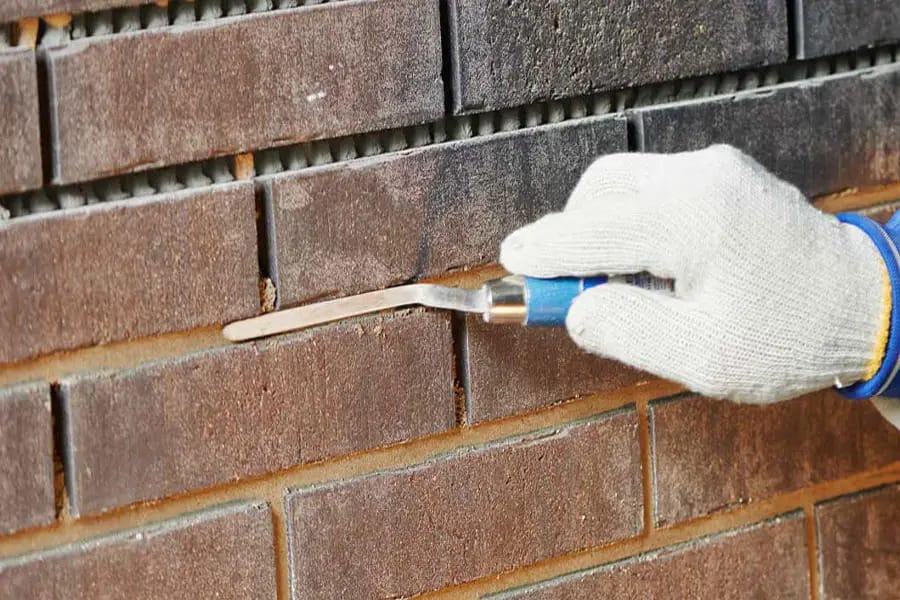
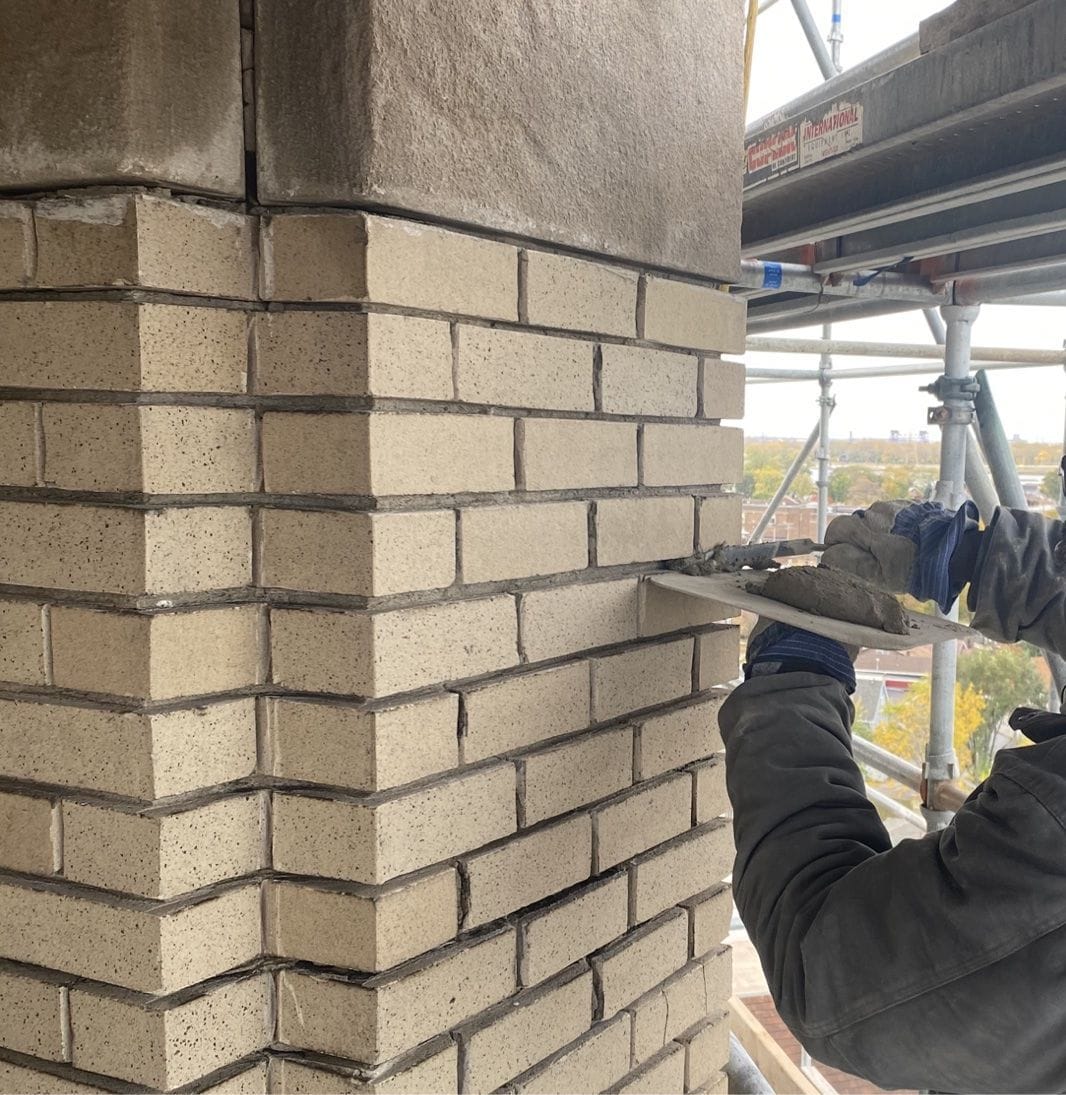
We then pack new mortar into the prepared joints in layers, compacting each layer so there are no voids. The joints are tooled to match the original profile, whether concave, flush, or weathered. On some historic brick buildings, a contrasting color "tuck" is added to mimic very fine joints, but only where appropriate and historically accurate. Finally, we cure and clean the wall so the repair blends into the existing masonry without hairline gaps that invite water.
Mortar Matching, Brick Replacement, and Material Options
For commercial tuckpointing to last, the new mortar must be compatible with the existing masonry. Noble Masonry Boston performs mortar matching that considers three factors: color, texture, and strength. We evaluate sand gradation, binder type (Portland cement, lime, or a blend), and any visible aggregates in the existing wall.
On older brick buildings in Boston, especially 19th and early 20th century structures in Back Bay, Beacon Hill, and South End, we often specify higher‑lime, lower‑cement mortars. These are softer and more vapor‑permeable, so the mortar joint takes the stress instead of the brick face spalling off in winter. For newer commercial buildings, a stronger Portland‑based mix is usually appropriate as long as it does not exceed the compressive strength of the masonry units.
Where bricks or stones are cracked, spalled, or have lost faces, we cut them out and tooth in new units. When possible we source reclaimed brick or regional products that match size and color so repairs are not obvious from the street. For high‑visibility facades, we may create test panels with different mortar tints so your facilities team can approve the best blend before we proceed across an entire elevation.
Sealants around window perimeters, control joints, and shelf angles are also evaluated. On many commercial repairs, we combine tuckpointing with replacement of failed sealant joints and through‑wall flashing repairs so the entire wall system sheds water correctly, not just the mortar joints.
Common Masonry Problems in Boston’s Climate and How We Address Them
Boston’s freeze‑thaw cycles, wind off the harbor, and deicing salts create a specific set of masonry issues that we see on commercial buildings every season. The most common include mortar erosion, brick face spalling, efflorescence, and movement cracking around structural steel and window openings.
Mortar erosion usually shows as deep, uneven joints that can hold water. Left alone, that water freezes, expands, and deteriorates bricks. We correct this by cutting back to sound material and repointing, often in combination with targeted brick replacement around parapets and coping stones where exposure is highest.
Brick face spalling, where the front of the brick shears off, is often tied to trapped moisture or overly hard mortar used in past repairs. Noble Masonry Boston identifies what is causing the saturation, which may be failed flashings or cap stones, not just the visible damage. We then replace damaged units and correct the drainage path. Simply swapping bricks without fixing the water entry leads to repeat failures.
Movement cracks, especially diagonal ones at corners of windows or along structural steel shelf angles, can indicate rust jacking of steel or building settlement. In these cases we coordinate with engineers as needed, remediate corroded steel, and then rebuild or repoint the masonry with proper jointing so it can flex slightly instead of cracking apart in the next temperature swing.
Project Planning, Timing, and What Boston Owners Should Expect
For commercial tuckpointing in Boston, the best working window is typically April through early November, when temperatures allow proper mortar curing and the risk of freeze is lower. We can work outside this window if absolutely necessary by using cold‑weather techniques, but this generally increases cost and complexity, so most owners choose the warmer months.
Before work begins, Noble Masonry Boston prepares a detailed scope with elevation diagrams that indicate where tuckpointing, brick replacement, sealant work, and any flashing repairs will take place. For larger buildings, we often stage projects over multiple seasons so you can budget and minimize impact on tenants or building operations.
Noise and dust are managed with scheduling and containment. On office or institutional properties, we can cluster louder grinding work outside of peak indoor meeting hours, and we use dust‑collection equipment and debris netting to keep the site clean. Access points, staging areas, and safe pedestrian routes are clearly marked and, where required, coordinated with city officials for sidewalk or lane adjustments.
Expect regular communication: progress photos, updated elevation markup as hidden issues are discovered, and clear change‑order documentation when conditions differ from original assumptions. This level of planning lets facilities managers justify costs internally and avoid surprises during or after the project.
Cost Drivers and How We Keep Commercial Tuckpointing Efficient
The cost of commercial tuckpointing and masonry repair in Boston is driven by access, height, extent of deterioration, and material complexity. Buildings that require suspended scaffolding or complex sidewalk protections will always cost more per square foot than low‑rise structures with simple staging. Likewise, facades with intricate detailing, decorative bands, or mixed materials (brick, stone, terra cotta) demand more labor and careful mortar matching.
Noble Masonry Boston controls costs in two ways: accurate investigation up front and targeted repair. During assessment we open small test areas at representative locations, such as parapets, mid‑wall, and around windows, to understand how deep the deterioration goes. This allows us to quote a realistic range instead of underbidding, then surprising you with constant extras.
Targeted repair means we prioritize areas that are actively leaking or structurally compromised, then address aesthetic issues as budget allows. On many commercial properties we phase work, tackling the worst elevations first, which can immediately reduce water intrusion and interior damage. The remaining faces are then scheduled in subsequent budget cycles.
Preventive maintenance plans are another way to protect your budget. After a major tuckpointing project, we often schedule 3 to 5 year inspection cycles with light touch‑up work. This approach lets you catch small joint failures or sealant breakdowns long before the building needs another large‑scale campaign.
Why Work With Noble Masonry Boston for Your Commercial Building
Commercial properties in Boston come with unique constraints: tight urban sites, strict permitting, heavy pedestrian traffic, and often historic requirements. Noble Masonry Boston is set up to handle all of this. Our crews are experienced in commercial site logistics, and we maintain safety programs that satisfy the expectations of institutions, universities, and larger property management firms.
We are familiar with local historic review boards and, when needed, can support your architect or engineer with technical data about masonry conditions, mortar compositions, and repair options that respect the building’s character. For newer buildings, we follow manufacturer guidelines for joint sealants, air barriers, and flashings so that repairs do not void warranties.
Every commercial tuckpointing and masonry repair project is assigned a dedicated point of contact who understands Boston’s climate, codes, and building types. From pre‑bid walkthrough through final punch list, you will know exactly who to call for updates, coordination, or documentation requests.
If you are seeing cracking, spalling, or water staining on your commercial building, contacting a masonry specialist early will always cost less than waiting. Noble Masonry Boston can inspect, prioritize, and plan the repairs so your brick or stone façades perform for decades instead of seasons.