Home › Commercial Brick Veneer Systems
We install commercial brick veneer systems in Boston, MA on new and existing buildings. Our crews handle anchored and panelized veneer assemblies designed for performance and appearance. We follow engineered details for attachment, flashing, and joints. Contact us to price and plan your commercial brick veneer scope.
Noble Masonry Boston provides professional commercial brick veneer throughout Boston, MA, Massachusetts and the surrounding area. Our licensed, insured crew delivers safe, clean, on-time work with a free estimate before anything begins. Call (617) 379-7421 or request your free quote.
Commercial Brick Veneer That Fits Boston Buildings
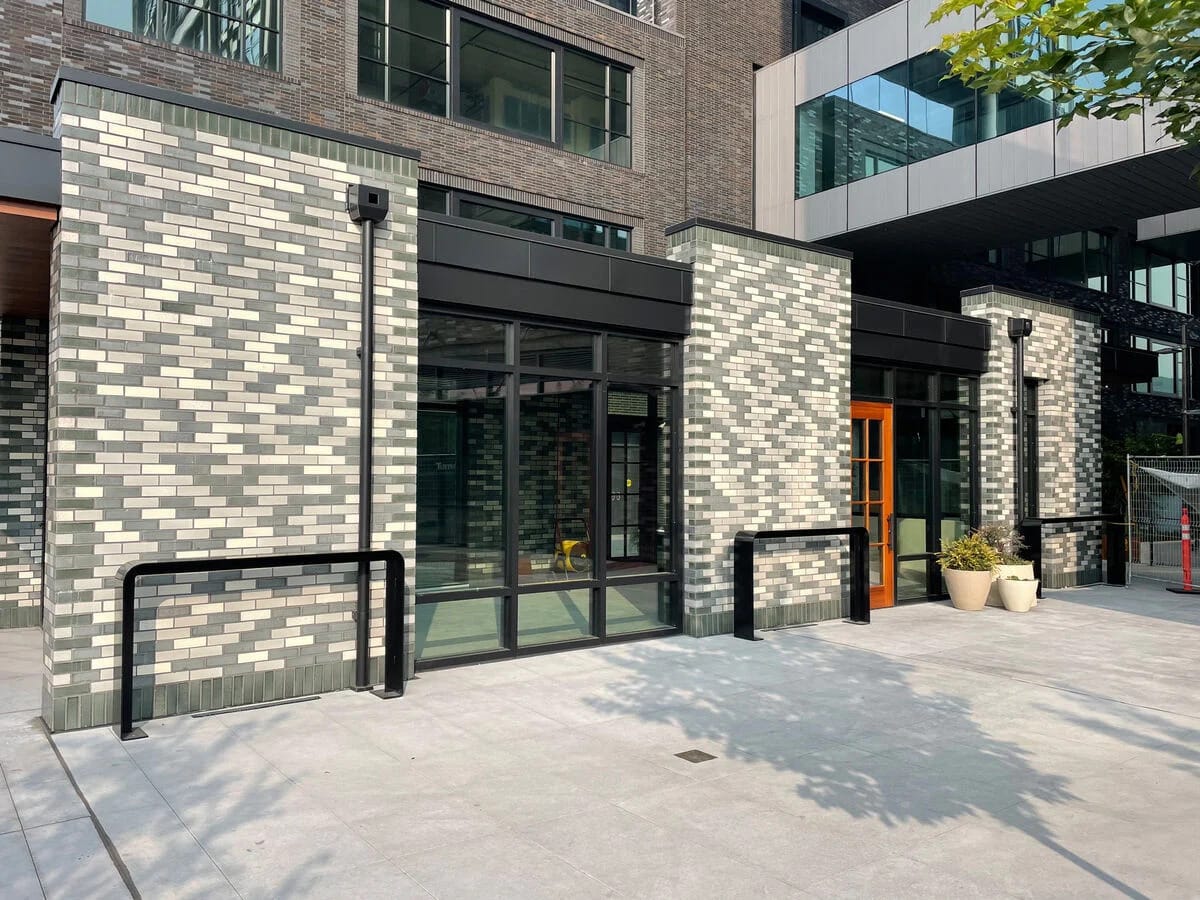
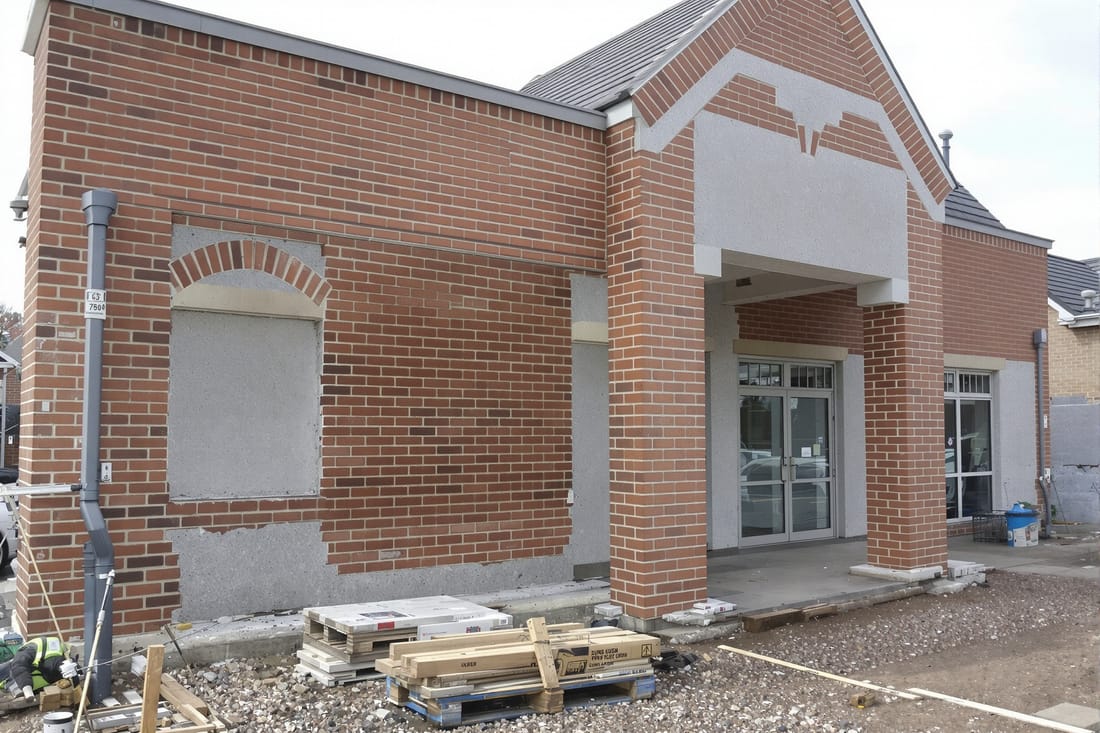
Commercial brick veneer gives you the classic Boston brick look without the structural weight and cost of full brick walls. At Noble Masonry Boston, we design and install commercial brick veneer systems that hold up to New England weather, meet local building codes, and work with the way your building is actually built.
Most of the commercial projects we handle in Boston are steel or concrete frame buildings with stud infill. Brick veneer becomes the exterior cladding, tied back to the structural wall with engineered anchors and supported at each floor line with shelf angles or relief angles. That set up lets your building move slightly with temperature changes without cracking the exterior.
We work on office buildings, multifamily properties, schools, institutional facilities, retail plazas, and mid rise mixed use projects. Whether you are refreshing a tired 1970s façade or planning a new ground up development, we can match the tone and scale of surrounding Boston neighborhoods so your building looks like it belongs there, not like it was dropped in from somewhere else.
How Our Commercial Brick Veneer Installations Actually Work
A successful commercial brick veneer project follows a very specific sequence. First, Noble Masonry Boston reviews your structural drawings and architectural details, then we confirm brick dimensions, bond pattern, expansion joint locations, and support angles with the design team. On many Boston projects we also walk the site with the GC to talk through staging issues on tight streets.
Next, we look closely at the substrate and weather barrier. For new construction, that usually means checking air and vapor barriers on sheathing, insulation thickness, and backup wall flatness. On retrofit work we often remove existing cladding, repair damaged sheathing, and coordinate new continuous insulation so the final veneer plane stays consistent and meets current Massachusetts energy code.
Once the base is ready, we install brick veneer anchors. These can be adjustable corrugated ties into steel studs, screw through anchors into concrete or CMU, or thermally broken clip systems when energy performance is a priority. Proper anchor spacing and embedment is critical on Boston waterfront and high wind locations, so we strictly follow engineered layouts.
We then lay the brick in controlled lifts, typically 4 to 6 feet at a time, checking plumb and line continuously. We use full mortar bedding, not spot bonding, and we rake or tool joints only when the mortar has reached the right set. Shelf angles and lintels over windows are flashed and weeped so water that gets behind the brick can drain back out instead of into your walls.
Material Choices, Design Options, and Cost Drivers
Most owners start the conversation with color, but for commercial brick veneer there are several practical decisions that affect both look and budget. Brick type is first. In Boston we commonly install modular, utility, and Norman size units. Larger format bricks can reduce labor costs but may change the look, which matters if you are trying to match historic neighboring structures.
We work with both extruded and molded bricks, as well as thin brick systems when weight limits or projection constraints apply. Face brick is still the most common for commercial work, but we often blend two or three colors or textures to keep large façades from looking flat. Mockup panels are standard on our jobs so you can approve the exact blend, joint profile, and bond pattern before we proceed with the full elevation.
Mortar is another key variable. We typically use Type N or Type S mortar for commercial veneer, depending on exposure and structural requirements, and we can pigment the mortar when you want either a strong contrast joint or a nearly invisible joint. Joint profile (concave, flush, weathered, or raked) affects water shedding and shadow lines, so we discuss that with the design team up front.
What drives cost the most is not just brick price. Complex detailing around window systems, frequency of expansion joints, number of shelf angles, height of the building, and how difficult it is to set up scaffolding or mast climbers on a Boston street all factor in. Work done above busy sidewalks or MBTA lines typically needs more protection and off hours scheduling, which we build into our proposals so there are fewer surprises later.
Dealing With Boston Weather, Scheduling, and Long Term Performance
New England weather is a real factor in commercial brick veneer work. Mortar does not like to be installed in extremes, so Noble Masonry Boston plans major veneer phases for spring through late fall when possible. In winter, we can still work, but we need heated enclosures, cold weather mortar mixes, and more careful curing. That adds cost and time, so on new builds we encourage GCs to release veneer areas early enough to avoid the coldest months.
Moisture control is the other big local issue. Freeze thaw cycles in Boston can punish poorly detailed veneer. Our crews pay close attention to through wall flashing at shelf angles, heads of windows, and at the base of the wall. We make sure there is a clear air cavity, proper weeps, and clean out as we go so mortar droppings do not block drainage.
We also see a lot of older commercial brick veneer in Massachusetts that has movement cracks or efflorescence. When we are adding new veneer to an existing building or tying into old sections, we evaluate the existing movement joints, shelf angle condition, and any signs of settlement. Sometimes we recommend additional joints or localized rebuilds to prevent new work from inheriting old problems.
Long term, commercial brick veneer should be relatively low maintenance, but it is not maintenance free. Owners should plan periodic inspections of joints, sealants at window interfaces, and any exposed steel elements. On waterfront or highly exposed sites like the Seaport or Revere, we often suggest more frequent checks and optional water repellent treatments that remain vapor permeable.
What Boston Owners Should Ask Before Hiring a Veneer Contractor
If you are comparing bids for a commercial brick veneer project in Boston, there are a few specific questions that will tell you a lot about the contractor. Ask how they are handling shelf angles and relieving angles, and whether they are including supply, installation, and corrosion protection. Ask how they coordinate with the air barrier and insulation trades, since many façade problems start at those transitions.
You should also request recent local references for buildings of similar height and complexity, not just any masonry work. A contractor who has installed brick veneer on an occupied downtown office building understands swing stage requirements, noise windows, and protection of pedestrian traffic in ways a purely suburban crew may not.
At Noble Masonry Boston, we provide a clear scope that spells out brick type, anchor system, insulation interface, flashing materials, and joint details. Our estimates identify what is included for access, hoisting, night or weekend work if your building needs to remain open, and any anticipated coordination with other envelope trades.
Finally, make sure your veneer installer is familiar with Massachusetts building codes, Boston specific requirements, and manufacturer installation guidelines for any proprietary systems, especially thin brick or engineered anchor products. A properly designed and installed commercial brick veneer system will outlast many other parts of your building, so it is worth taking the time to choose a contractor who treats it as more than just another cladding option.